Cherry eye in pets - Diagnosis and treatment
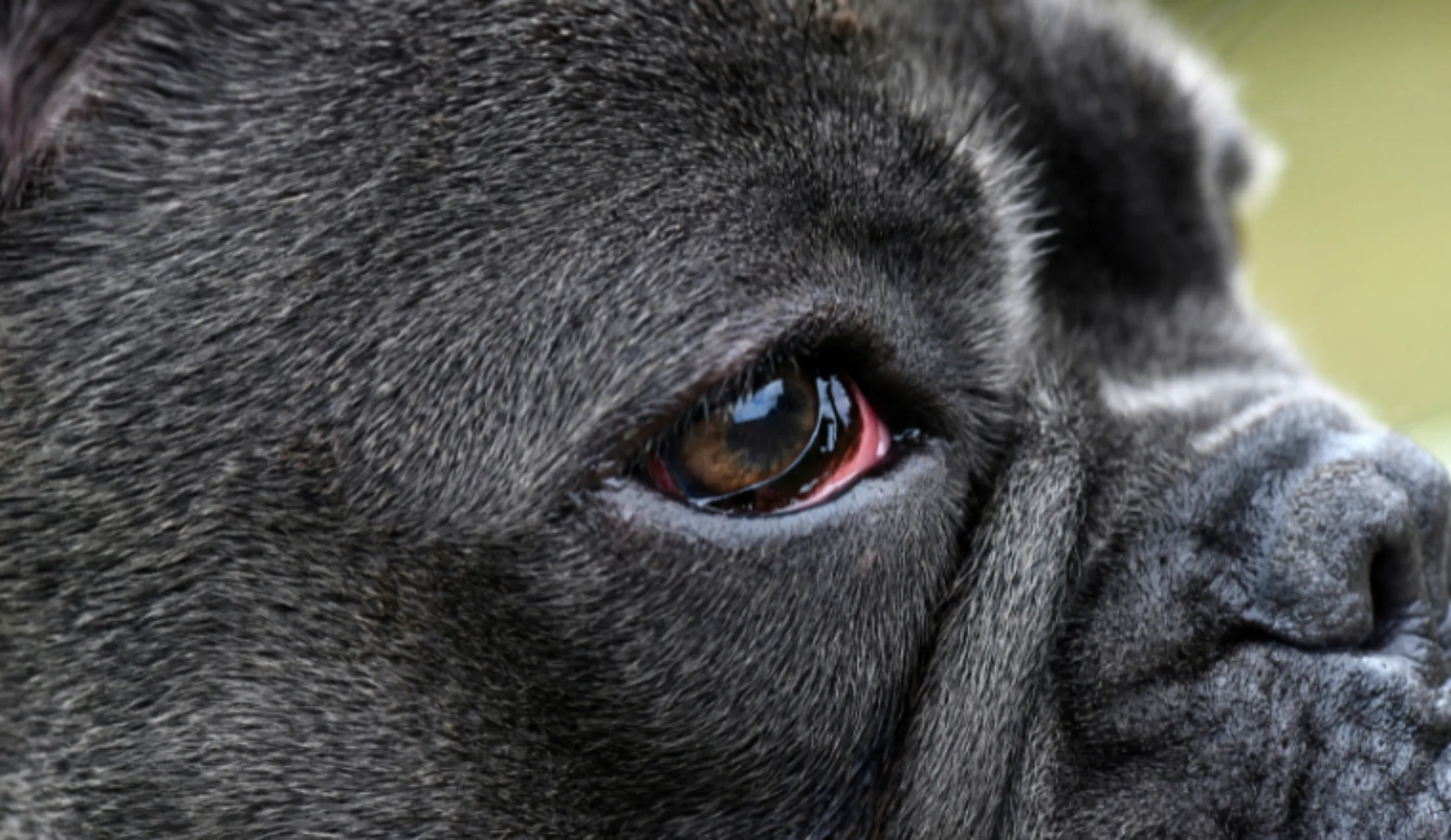
Cherry eye, also commonly known by this name in everyday language, is an abnormality of the third eyelid. The tear gland in the third eyelid becomes displaced and protrudes outward, causing a red, cherry-like swelling to appear in the corner of the eye. The condition occurs most often in young dogs of certain breeds but can, in rare cases, also affect cats.
In this article, we discuss the causes, symptoms, diagnosis, and treatment of cherry eye in pets.
What is cherry eye?
Cherry eye is the protrusion of the tear gland of the third eyelid. This results in a red, cherry-shaped swelling in the inner corner of the eye.
Causes of cherry eye
- Hereditary predisposition in certain breeds (Bulldog, Cocker Spaniel, Beagle, Pekingese, Cavalier, Chihuahua, Maltese, Shar-Pei, Pug)
- Weak connective tissue bands that are meant to hold the gland in place
- Most commonly occurs in young animals under 2 years of age
- Also occurs in cats and rabbits
Symptoms of cherry eye
- Red, rounded swelling in the corner of the eye
- Excessive tearing
- Possible eye infections
- Sometimes irritation or rubbing at the eye
Diagnosis of cherry eye
The diagnosis is made through physical examination. The appearance of a red swelling in the corner of the eye is usually typical. Additional examination may be needed to rule out other eye abnormalities.
Treatment of cherry eye
- Medication: eye ointment or drops can temporarily reduce irritation but do not resolve the problem.
- Surgical treatment: the standard therapy is repositioning the tear gland and suturing it in place so that it does not protrude again.
- Removing the gland is not recommended, as this later causes severe dry eye.
Prognosis
The prognosis after surgical correction is usually good. Cherry eye can sometimes recur, requiring a second procedure.
Want to know more?
Read more about ophthalmology at Nesto. Our veterinarians have extensive experience in diagnosing and treating eyelid and third eyelid problems in dogs and cats.
Frequently asked questions (FAQ)
Is cherry eye painful for my pet?
Cherry eye usually does not cause severe pain, but it does cause irritation and an increased risk of infection.
Does cherry eye always need to be surgically corrected?
Yes, surgery is the only permanent solution. Medication can temporarily reduce irritation but does not resolve the problem.
Is cherry eye more common in certain breeds?
Yes, especially in dog breeds such as the Bulldog, Cocker Spaniel, Beagle, Pekingese, Cavalier, Chihuahua, Maltese, Shar-Pei, and Pug.
Can cherry eye heal on its own?
No, the gland remains protruded and can only be repositioned through a procedure.
Can cherry eye come back after surgery?
Yes, in some cases cherry eye recurs and a second procedure is needed.

Nesto
Share on