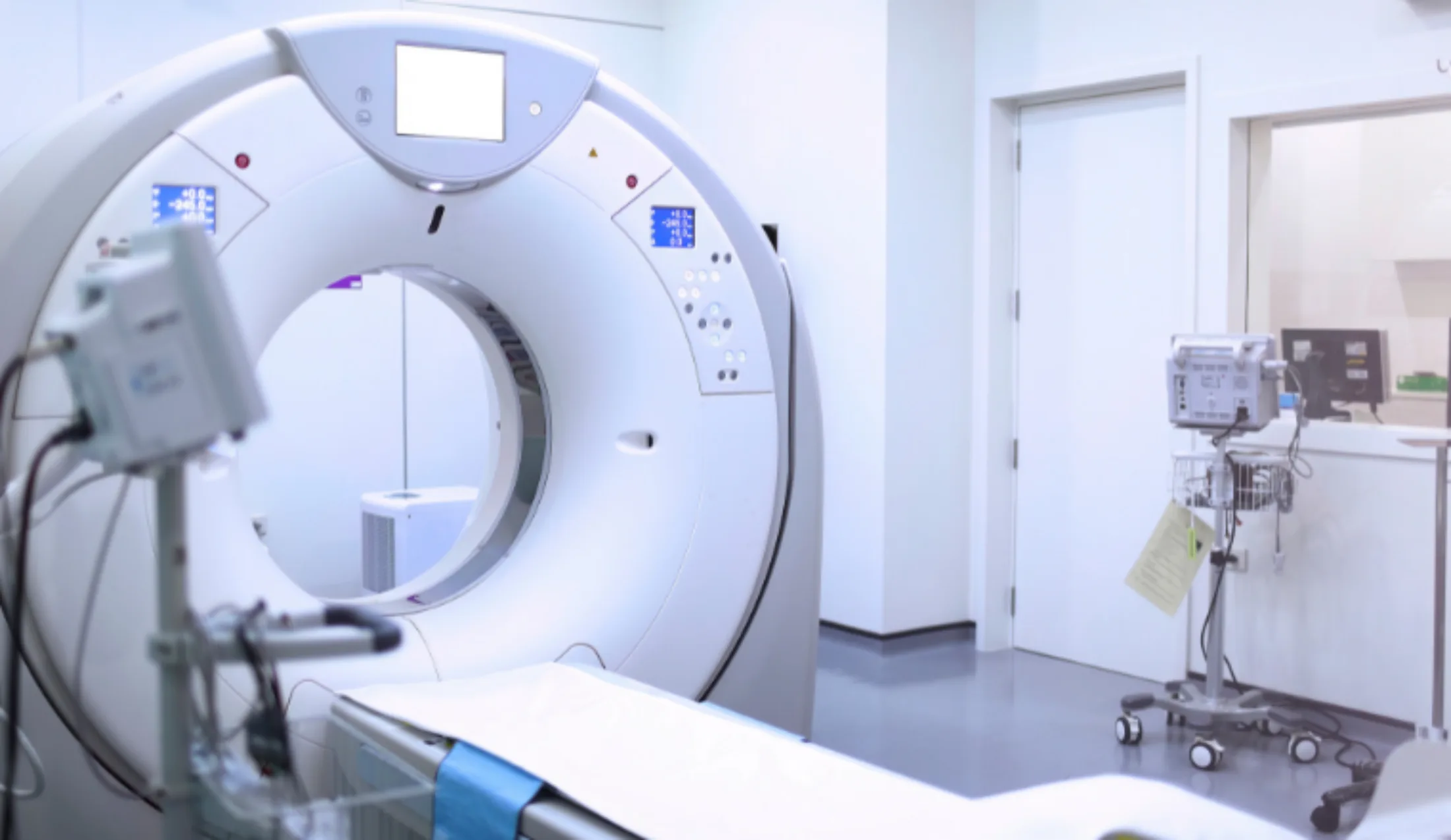
CT scan in pets - Safe and advanced imaging
A CT scan (computed tomography) is an advanced imaging technique that uses X-rays to create cross-sectional images of the body. In dogs and cats, CT is increasingly used to assess bone structures, lungs, tumors, and complex neurological problems.
In this article, we discuss how a CT scan works, when it is used, and what risks are associated with it.
What is a CT scan?
A CT scan uses X-ray radiation directed through the body from various angles. A computer converts this information into detailed cross-sectional and 3D images. This allows organs, bones, and tissues to be assessed far more precisely than with standard X-rays.
When is a CT scan used?
CT scans are used in dogs and cats in a variety of situations, such as:
- Assessment of complex fractures, limb deformities, or joint conditions
- Detection of tumors and metastases
- Examination of the lungs and nasal cavity
- Neurological diagnostics when spinal cord compression due to a herniated disc or tumors is suspected
- Preoperative planning for orthopedic or oncological surgery
- Other applications such as angiography (imaging blood vessels) and lymphangiography (imaging the lymphatic system)
How does a CT scan work?
For a CT scan, the animal is placed under light anesthesia or sedation so that it remains completely still. The animal is placed on a movable table that slides through the CT scanner. During the scan, hundreds of thin X-ray images are taken and processed by a computer into 2D and 3D images. The procedure usually takes 10 to 20 minutes. Contrast fluid is often administered for better visibility of tissues, organs, or blood vessels.
Is a CT scan harmful?
A CT scan uses X-ray radiation. Although this theoretically carries some risk, the dose is very low, and the examination is only performed when the benefits clearly outweigh the drawbacks. With occasional use, the risk of harmful effects is negligible.
Risks and precautions
The main risks associated with a CT scan are:
- The use of anesthesia or sedation (a small risk, closely monitored by the anesthesia team and always taking the patient's physical status into account (ASA class))
- Possible allergic reaction to contrast fluid (very rare)
- Minimal exposure to radiation (not harmful with occasional use)
The benefits of the scan almost always far outweigh these small risks.
Recovery after a CT scan
After the scan, the animal wakes up calmly from anesthesia. Most dogs and cats recover quickly and can go home the same day. When contrast fluid is used, additional monitoring is sometimes needed, but complications are extremely rare.
Want to know more?
Read more about our services in diagnostic imaging and neurology. Our specialized veterinarians at Nesto have extensive experience with CT diagnostics and guide you and your pet through the entire diagnostic process.
Frequently asked questions (FAQ)
What is a CT scan?
An advanced X-ray examination that creates detailed cross-sectional and 3D images of the body.
Does my pet need anesthesia?
Yes, to remain still, the animal is given light anesthesia or sedation.
Is a CT scan dangerous?
No, the radiation dose is low and safe with occasional use. The main risk comes from the anesthesia (thanks to careful monitoring, this risk is limited).
Is contrast fluid always used?
Usually, yes, except in examinations where it is not necessary (such as a complex fracture or limb deformity) or when it poses a risk to the patient (kidney disease or a previous allergic reaction).
How quickly are the results available?
The images are available immediately and are often assessed by the specialist the same day. For a more detailed evaluation of the images, they are also regularly sent to an external radiologist.

Nesto
Share on