Discospondylitis in pets - Symptoms, diagnosis & treatment
Discospondylitis is an infection of the intervertebral disc and the adjacent vertebral bodies. This condition leads to inflammation, pain, and sometimes instability or compression of the spinal cord. Discospondylitis occurs most frequently in dogs, but can also occur in cats. The infection can be caused by bacteria, fungi, or, rarely, parasites.
In this article, we discuss the causes, symptoms, diagnosis, treatment, and prognosis of discospondylitis in pets.
What is discospondylitis?
Discospondylitis is an infection affecting the intervertebral disc and the adjacent vertebral bodies. The infection usually arises from the spread of pathogens through the bloodstream (hematogenous spread), but can also result from a local infection or trauma. The disease causes severe pain and can lead to neurological deficits when pressure is placed on the spinal cord.
Which animals are at risk?
Discospondylitis occurs mainly in medium to large breed dogs, often in adult animals. In cats, the condition is rarer.
Causes of discospondylitis
The most common causes are:
- Bacterial infections (Staphylococcus, Streptococcus, E. coli)
- Fungal infections (for example, Aspergillus)
- Infections elsewhere in the body that spread to the spine (mainly from the bladder or prostate)
- Trauma or surgery to the spine
- Immune disorders that make animals more susceptible to infections
Symptoms in dogs and cats
- Severe back or neck pain
- Lameness or stiffness
- Fever and reduced appetite
- Neurological deficits due to spinal cord compression
Diagnosis of discospondylitis
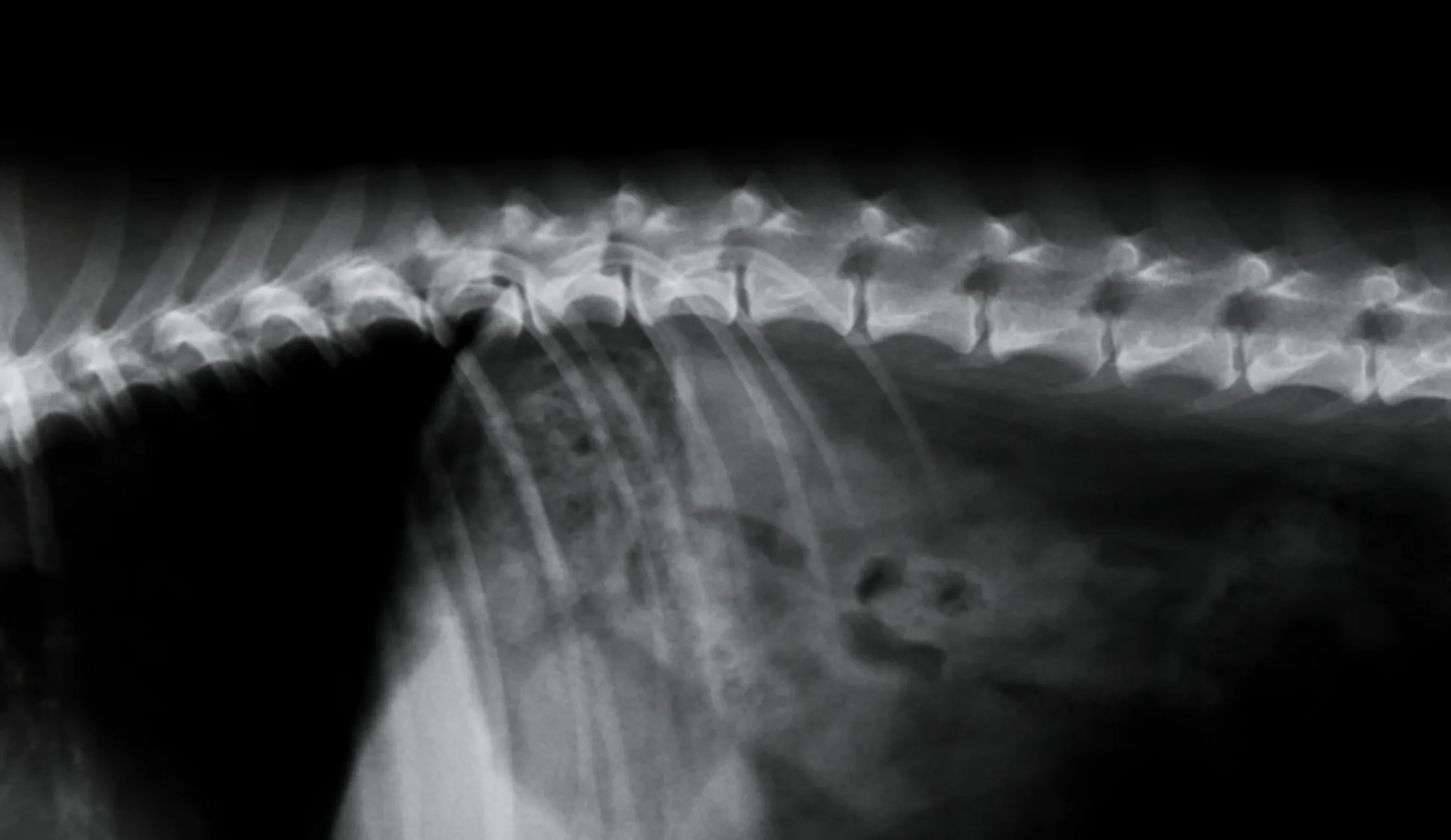
The diagnosis is made using clinical examination and medical imaging. X-rays can show changes in the intervertebral disc and vertebrae, but MRI and CT are more sensitive and reveal the infection at an earlier stage. Blood tests and bacterial culture help identify the causative pathogen.
Treatment of discospondylitis
Medication
The foundation of treatment is long-term antibiotic or antifungal therapy, depending on the cause. Treatment often lasts 6 to 12 weeks. Sometimes longer treatment is needed. Pain relief and anti-inflammatory medication are added to relieve symptoms.
Surgical treatment
When there is instability or compression of the spinal cord, surgery may be necessary. The goal of the operation is to relieve pressure on the spinal cord and stabilize the vertebrae.
Recovery and prognosis
The prognosis depends on the severity of the infection, the pathogen involved, and how quickly treatment begins. Many dogs recover well with long-term antibiotics. In cats, the prognosis is more variable due to the rarity of the condition and often later diagnosis.
Want to know more?
Read more about our services in neurology, internal medicine, and surgery. Our specialized veterinarians at Nesto have experience diagnosing and treating discospondylitis and will guide you and your pet through the recovery process.
Frequently asked questions (FAQ)
What is discospondylitis?
An infection of the intervertebral disc and the adjacent vertebrae, usually caused by bacteria or fungi.
Which animals are at risk?
Mainly medium to large dogs. It occurs less often in cats.
How is the diagnosis made?
Through medical imaging such as X-ray, CT, or MRI, supplemented by blood tests and bacterial culture.
How is discospondylitis treated?
With long-term antibiotics or antifungal medication, combined with pain relief. Surgery is sometimes necessary.
What is the prognosis?
Good with early diagnosis and treatment, but depends on the severity and type of infection.

Nesto
Share on