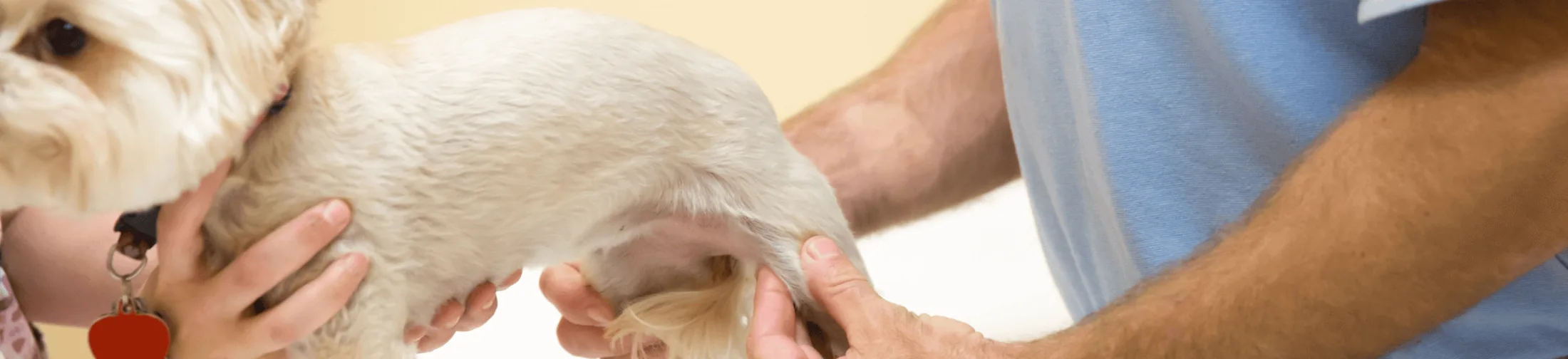
Elbow Dysplasia in Pets – Causes, Diagnosis, Treatment & Recovery
Elbow dysplasia is not a single deformity, but a collective term for several developmental disorders of the elbow joint. It is one of the most common causes of lameness in young dogs of medium to large breeds. The condition often leads to pain, restricted movement, and premature osteoarthritis. In cats, elbow dysplasia is extremely rare.
In this article, we discuss the causes, symptoms, diagnosis, treatment, and recovery of elbow dysplasia in pets.
What is elbow dysplasia?
Elbow dysplasia is not a single deformity, but a collective term for a group of conditions that affect the elbow joint. The primary components are:
- Fragmented Coronoid Process (FCP)
- Ununited Anconeal Process (UAP)
- Elbow Incongruity
- Medial Compartment Disease (MCD)
- Osteochondritis Dissecans (OCD)
All of these conditions occur either individually or in combination, leading to abnormal stress on the joint, pain, and eventually osteoarthritis.
Which animals are at risk?
Elbow dysplasia occurs primarily in medium to large dog breeds, including the Labrador Retriever, German Shepherd, Bernese Mountain Dog, Golden Retriever, and Rottweiler, but it can generally occur in any breed. The first symptoms usually develop between 4 and 12 months of age. In cats, elbow dysplasia is rarely diagnosed and is usually associated with trauma or growth disorders.
Symptoms in dogs and cats
In dogs:
- Lameness in one or both front legs
- Pain when moving the elbow
- Stiffness, especially after rest
- Reduced muscle mass in the front leg
Decreased performance during play or work
In cats:
- Extremely rare
- If present: subtle lameness or stiffness, often trauma-related
Diagnosis of elbow dysplasia
The diagnosis is made through a combination of physical examination and diagnostic imaging. A CT scan can provide more detailed information, but arthroscopy is the gold standard. An arthroscopy is primarily diagnostic and can also be (largely) therapeutic.
Treatment of elbow dysplasia
Treatment depends on the specific condition and the severity of the symptoms. In mild cases, a conservative approach involving rest, pain relief, weight management, physiotherapy, and sometimes joint injections may suffice. In many cases, surgery is required, such as arthroscopic removal of loose fragments, corrective osteotomies, or, in severe cases, an elbow replacement.
In cats, a conservative treatment is usually chosen, given the extreme rarity of the condition.
Recovery and aftercare
After surgical treatment, a recovery period of several weeks to months follows. Controlled movement, physiotherapy, and hydrotherapy play a major role in the recovery process. In dogs, this usually takes 8 to 12 weeks, depending on the severity and the chosen treatment. The prognosis varies greatly per case: the earlier the diagnosis is made and the less severe the abnormalities, the better the long-term result. However, some degree of osteoarthritis often remains present.
In cats, recovery is usually faster, but clear guidelines are lacking due to the rarity of the condition.
Want to know more?
Read more about our services in orthopedics and rehabilitation. Our specialized veterinarians at Nesto have extensive experience with elbow conditions and are ready to provide advice.
Frequently Asked Questions (FAQ)
It is a collective term for developmental disorders of the elbow: FCP, UAP, OCD, incongruity, and MCD.
It is much more common in dogs, especially in large breeds. In cats, it is extremely rare.
Through physical examination, X-rays, CT scans, and often arthroscopy.
Conservative (rest, medication, physiotherapy) or surgical (arthroscopy, osteotomy, prosthesis).
The prognosis varies per case: early diagnosis and treatment provide the best results, but osteoarthritis often remains a long-term risk.

Nesto
Share on