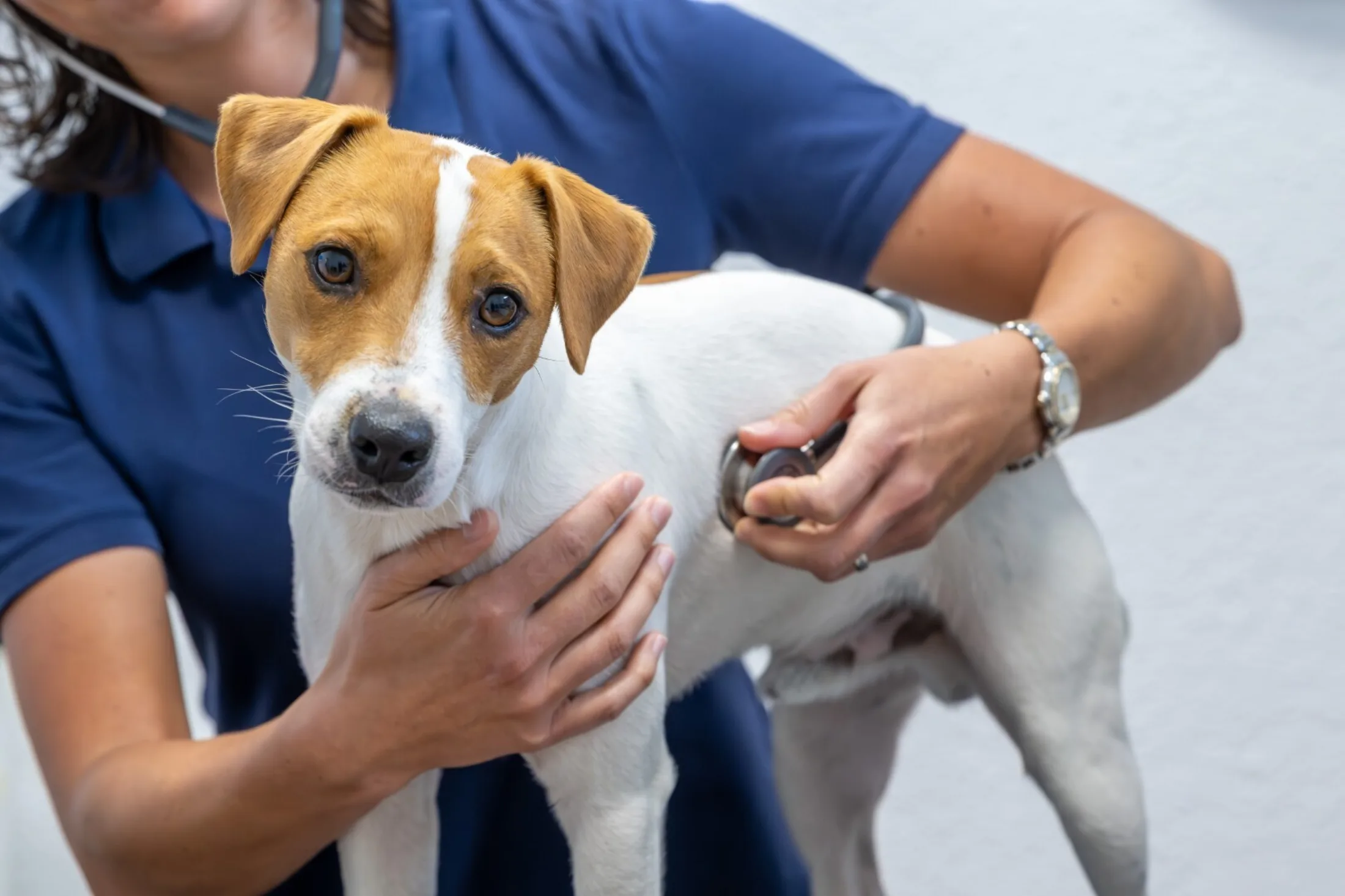
Hip Replacement in Pets – A Modern Solution for Severe Hip Conditions
A hip replacement is a surgical procedure in which the natural hip joint is replaced by an artificial joint. This surgery is primarily performed on dogs with severe hip conditions, such as hip dysplasia or advanced osteoarthritis, but it can also offer a solution for complex fractures or when an FHO surgery (femoral head ostectomy) has provided insufficient results. In cats, the procedure is performed less frequently, but it is indeed possible, and certainly indicated for larger or heavier breeds such as the Maine Coon. The results are generally excellent, meaning the procedure significantly improves the comfort and mobility of the animal in many cases.
In this article, we discuss the indications, surgical technique, recovery, and prognosis of a hip replacement in pets.
What is a hip replacement?
In a hip replacement, the diseased hip joint is completely replaced by an implant. This implant usually consists of a ceramic head, titanium neck, and stem that are placed in the femur on one hand, and a titanium socket (cup and synthetic inlay) that is anchored in the pelvis on the other. The goal is to enable pain-free movement and to restore the functionality of the joint.
When is a hip replacement necessary?
A hip replacement is used for severe hip conditions where other treatments are not sufficient. Typical indications include:
- Severe hip dysplasia
- Severe osteoarthritis
- Irreparable fractures of the hip joint
- Conditions where a femoral head ostectomy does not provide sufficient results
Which animals are at risk?
Hip replacements are most commonly performed on dogs of all breeds, but cats, especially larger or heavier breeds, can also benefit from this procedure. Whether a hip replacement is possible is determined based on specific measurements that take into account the age and health status of the animal. Animals with other serious health problems are usually not eligible for this surgery.
The surgical technique
During the surgery, the diseased hip joint is removed under general anesthesia. Subsequently, an artificial socket and ceramic head with a titanium neck and stem are placed and firmly anchored. Different systems exist, such as cemented and uncemented prostheses. A promising uncemented prosthesis is the Kyon system, which is available for all weight categories. The choice between cemented or uncemented prostheses depends on the size of the animal, the quality of the bone, and the preference of the surgeon.
Recovery and aftercare
Recovery after a hip replacement is intensive and requires strict adherence to the rehabilitation protocol. During the first few weeks, rest and controlled movement are essential to allow the implant to integrate properly. This is followed by a gradual build-up with physiotherapy, muscle-strengthening exercises, and often hydrotherapy. Full recovery typically takes 2 to 3 months.
The prognosis is very good for most dogs and cats: more than 90% can move pain-free again and return to an active life.
Want to know more?
Read more about our services in orthopedics and rehabilitation. Our specialized veterinarians at Nesto have extensive experience with hip replacements and are ready to guide your pet toward a pain-free life.
Frequently Asked Questions (FAQ)
A surgery in which the natural hip joint is replaced by an artificial joint.
In cases of severe hip dysplasia, osteoarthritis, or irreparable fractures where other treatments fall short.
Yes, but the procedure is more common in dogs.
Recovery usually takes 2 to 3 months and requires intensive physiotherapy.
The prognosis for both dogs and cats is excellent, with a success rate of more than 90%.

Nesto
Share on