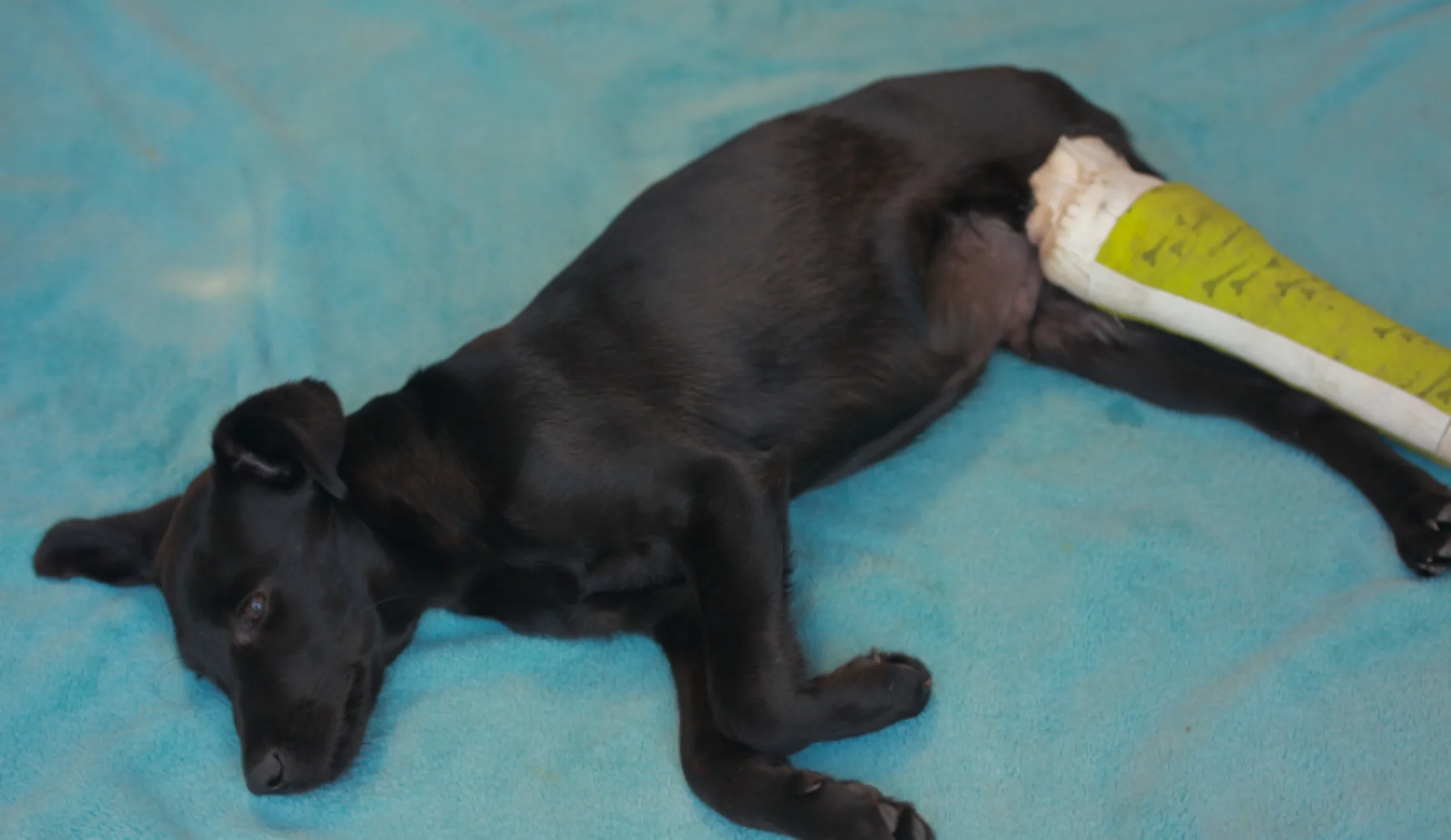
Traumatic fractures in pets - Causes, treatment & recovery
Traumatic fractures are bone breaks caused by a sudden application of force, such as in traffic accidents, falls, or bite wounds. These conditions occur frequently in dogs and cats and form an important part of orthopedic emergency care. Fractures range from simple cracks to complex and multiple bone breaks.
In this article, we discuss the causes, types of fractures, diagnosis, treatment, and recovery of traumatic fractures in pets.
What are traumatic fractures?
A traumatic fracture is a bone break caused by external forces, such as being hit by a vehicle or a fall. Unlike pathological fractures, which arise from weakened bones (for example, due to tumors), traumatic fractures occur in otherwise healthy bones.
Which animals are at risk?
All dogs and cats can sustain traumatic fractures. Common causes include:
- Traffic accidents
- Falls from height (especially in cats, the so-called 'high-rise syndrome')
- Bite wounds from fights
- Severe trauma during play or sport
Types of fractures
Traumatic fractures can vary greatly in severity and shape. Some important types are:
- Closed fractures: the bone is broken but the skin remains intact
- Open fractures: the bone protrudes throught the skin or the skin is open due to trauma
- Simple fractures: one single fracture line
- Multiple or comminuted fractures: several fracture lines or shattering
- Greenstick fractures: incomplete fractures more common in young animals
- Luxation fractures: fractures accompanied by joint dislocation
Symptoms in dogs and cats
The most common symptoms of a traumatic fracture:
- Lameness or completely taking the weight off a leg
- Visibly abnormal position or abnormal movement
- Swelling and pain on touch
- In open fractures: a visible wound with bone fragments
- Signs of shock may sometimes occur with severe trauma
Diagnosis of traumatic fractures
The diagnosis is made based on physical examination and imaging. X-rays are the standard for visualizing the fracture. In complex cases, a CT scan may be needed to determine the exact nature of the fracture. In addition, the animal's general condition is assessed, especially in cases of severe trauma.
Treatment of traumatic fractures
Treatment depends on the type of fracture, its severity, and its location. For simple closed fractures, conservative treatment with a splint or cast may sometimes be chosen. In most cases, however, surgery is necessary, using plates, screws, pins, or external fixation. For open fractures, emergency surgery is required to prevent infection.
Recovery and aftercare
Recovery varies greatly and generally takes 6 to 12 weeks, depending on the fracture and the animal. Strict rest and controlled movement are essential for a good outcome. Hydrotherapy and physiotherapy can contribute to faster muscle building and recovery of mobility. The prognosis is good in many cases, but complications such as infections or lasting stiffness can occur.
Want to know more?
Read more about our services in orthopedics and trauma surgery. Our specialized veterinarians at Nesto have extensive experience treating fractures and guide you and your pet through the entire recovery process.
Frequently asked questions (FAQ)
What is a traumatic fracture?
A bone break caused by external forces such as a fall or being hit by a vehicle.
What is the difference between open and closed fractures?
In an open fracture, the bone is in contact with the outside air; in a closed fracture, the skin remains intact.
How is the diagnosis made?
Through physical examination and X-rays. Sometimes a CT scan is needed for more detail.
Is surgery always necessary?
Not always. For simple fractures, a splint or cast may be sufficient, but surgery is often the best option.
How long does recovery take?
On average 6 to 12 weeks, depending on the severity and location of the break.
What is the prognosis?
Good in most cases, provided treatment is timely. Complications such as infections can affect the outcome.

Nesto
Share on